Good Marketing Starts With Understanding the Customer
It is easy to get focused on the mechanics of marketing.
What should we post?
What should the website say?
Should we advertise?
Do we need to be on LinkedIn?
Should we send email?
Those are all valid questions.
But there is another question that needs to come first:
Who are we trying to reach?
If you do not have a good understanding of the customer, it becomes much harder to make good decisions about the message, the channel, the offer, or the next step.
You Need More Than a Broad Description
A business may say:
“We work with homeowners.”
“We serve small businesses.”
“Our customers are women over 40.”
“We work with manufacturers.”
Those descriptions may be accurate.
But they do not tell you much about how to market to those people.
To make better marketing decisions, you need to understand more.
What problem are they trying to solve?
What has happened that caused them to start looking?
What matters most to them?
What worries them?
What are they comparing?
What information do they need before they feel comfortable moving forward?
Those answers are where useful customer understanding begins.
Demographics Matter — But They Are Only Part of the Picture
Age, income, location, family status, education, and other demographic information can be very important.
In some businesses, they may strongly influence the buying decision.
But demographics alone do not tell you why someone buys.
Two people who look almost identical on paper can make very different decisions.
One may care most about price.
Another may care more about convenience.
Another may value expertise.
Another may be worried about risk.
Another may simply want someone who makes the process easier.
The numbers help describe the customer.
The motivations help you understand them.
Pay Attention to the Problem Behind the Purchase
Customers are usually not buying the product or service simply because they want the product or service.
They are trying to accomplish something.
A homeowner is not necessarily buying a remodel.
They may be trying to create enough space for a growing family.
A business owner is not necessarily buying bookkeeping.
They may be trying to stop worrying about whether the numbers are right.
Someone looking for IT support may not simply want technical help.
They may want fewer disruptions and someone dependable to call when something goes wrong.
Understanding the problem behind the purchase gives you much stronger material for your marketing.
What Triggers Them to Start Looking?
Timing matters too.
What causes someone to move from:
“I should probably do something about this someday.”
to:
“I need to solve this now.”
That trigger could be:
- A problem getting worse
- A deadline
- A major life change
- A business change
- A bad experience
- A financial concern
- A recommendation from someone they trust
- Frustration reaching a breaking point
Knowing the trigger helps you understand where the customer is mentally when they first encounter your business.
What Matters Most in the Decision?
Not every customer values the same thing.
They may care about:
- Price
- Speed
- Expertise
- Convenience
- Reliability
- Personal attention
- Flexibility
- Reduced risk
- Simplicity
- Quality
- Long-term value
If you know what matters most, your marketing can emphasize the right things.
If you do not, you may spend a lot of time talking about benefits the customer does not care about nearly as much as you do.
What Makes Them Hesitate?
Good customer understanding also includes knowing what may stop someone from moving forward.
Common concerns might include:
- Cost
- Time
- Fear of making the wrong decision
- Not understanding the process
- Concern about disruption
- Previous bad experiences
- Uncertainty about results
- Difficulty comparing options
These are not just sales objections.
They are messaging opportunities.
If you know what makes people hesitate, you can address those concerns before they become barriers.
What Do They Need to Hear?
This may be one of the most useful questions you can ask.
What does your customer need to understand before they feel comfortable taking the next step?
Maybe they need to know:
- How the process works
- What makes your approach different
- What happens after they contact you
- What the investment includes
- How long something typically takes
- Whether you have experience with their situation
- What kind of results they can realistically expect
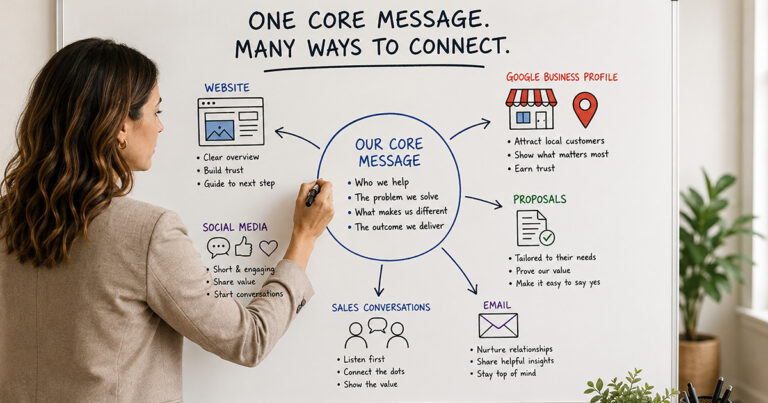
The answers help shape your website, sales conversations, social content, Google presence, emails, and other marketing.
Better Customer Understanding Makes Marketing Easier
Once you understand the customer more clearly, a lot of marketing decisions become easier.
You have a better idea of:
- What to say
- What not to say
- Which benefits to emphasize
- Which objections to address
- Which examples to use
- Which channels may matter most
- What next step makes sense
You are no longer creating marketing for a vague audience.
You are communicating with a person whose needs and priorities you understand.
The Bottom Line
A complete ideal-customer profile can go very deep.
And there are times when that deeper work is absolutely worthwhile.
But even at a basic level, every business should understand:
What their customer is trying to solve.
What matters to them.
What may hold them back.
What they need to hear before they move forward.
Because the better you understand the customer, the easier it becomes to create marketing that actually connects.